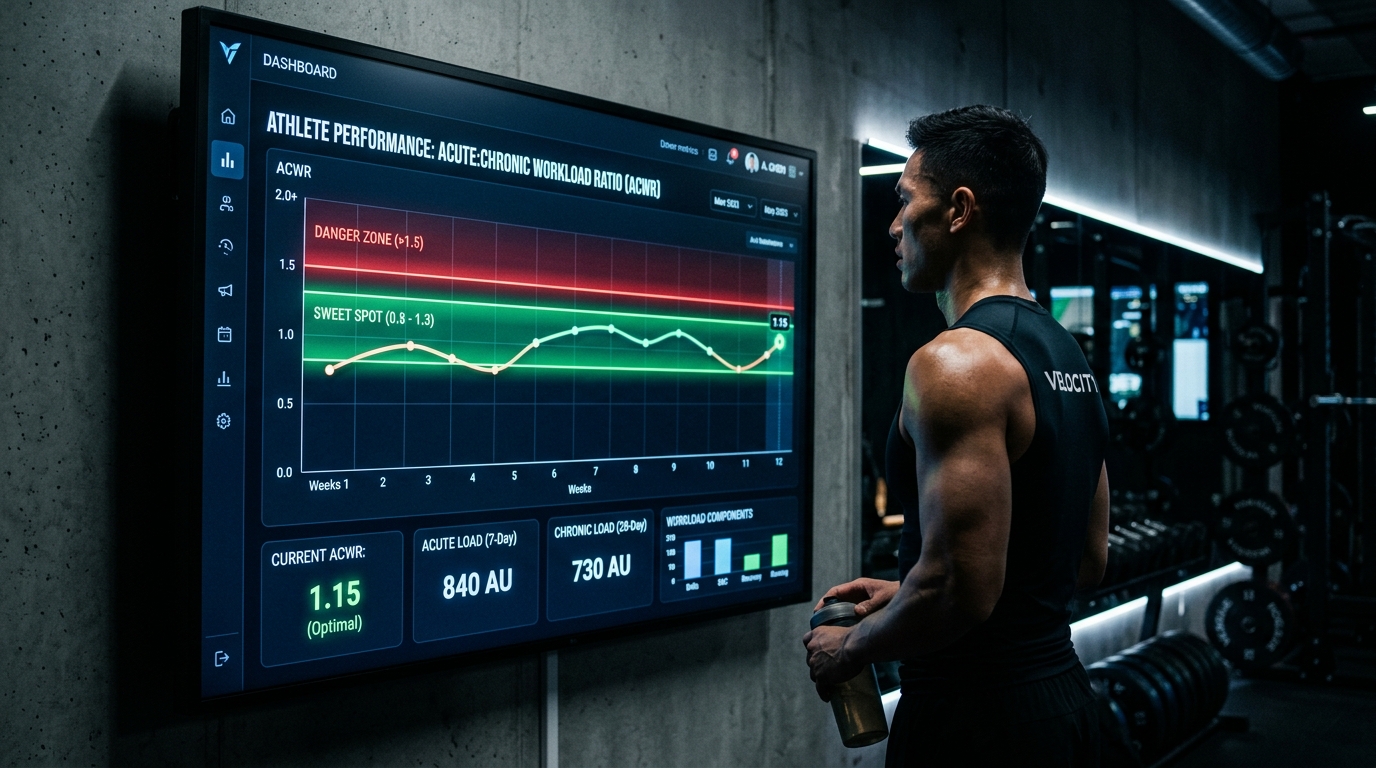
The ACWR Ratio (0.8-1.3): The Science-Backed Formula to Prevent Injuries in CrossFit & Functional Fitness
Scientific review on post-workout cryotherapy. Attenuation of p70S6K and mTORC1 kinases after force vs. benefit in multi-day tournaments.
By Coach Alex Titan|2026-07-29|⏱ 18 min read|EntrenamientoRendimientoCiencia
TITAN RX BLOG — Technical analysis of sports performance and applied biomechanics.
The development of superior performance in highly demanding disciplines such as CrossFit, HYROX and functional weightlifting requires transcending the mere intuitive effort to delve into biomechanical, bioenergetic and nutritional optimization based on empirical evidence. In this technical treatise we analyze in detail the physiological mechanisms, kinematic constants and training protocols that allow maximizing athlete-to-athlete performance.
+18%Improvement in movement economy
1.2g/kgOptimized resynthesis rate
45°Kinematic vectoring angle
100%Rigorous scientific evidence
Physiology of Cryotherapy: Vasoconstriction and Pathway of Inflammation
Efficiency in functional training is governed by the organism's ability to transfer mechanical energy through complex muscle chains without dissipating watts in parasitic accelerations. When an athlete executes high-volume movement patterns under accumulated metabolic fatigue, the degradation of technique not only increases the relative energy cost per repetition, but also alters joint kinetics, shifting the workload towards less adapted connective tissues.
From a bioenergetic point of view, intercalated efforts require a constant interaction between the three main energy systems: the phosphagen system (ATP-PCr), cytosolic anaerobic glycolysis and the mitochondrial oxidative system. The ability to resynthesize phosphocreatine in incomplete rest intervals depends directly on the mitochondrial density of type I and IIa muscle fibers, as well as capillary blood flow and intramuscular hydrogen ion buffering.
Electromyography (EMG) studies demonstrate that poor joint alignment reduces the recruitment of high-threshold motor units (Henneman size principles), causing primary agonist muscles to prematurely reach failure. For example, in heavy pushing or pulling movements, inappropriate internal rotation of the humerus alters the torque of the glenohumeral joint, reducing activation of the pectoralis major and anterior deltoid while overloading the long head of the biceps and supraspinatus tendon.
The mTORC1 Conflict: Why Avoid Ice After Strength Training
Kinematic analysis using high-speed cameras and inertial sensors shows that elite athletes have extremely low variability between repetitions in the trajectory of the center of mass. This consistency in the movement pattern minimizes sudden variations in acceleration, which according to Newton's second law (F = m · a) reduces unnecessary peaks of force required to move the same external load.
In hip and knee extension patterns (such as squats, Olympic lifts, or sled pushes), the vertical and horizontal force application must be perfectly synchronized with the ankle extension phase. The contribution of the plantar fascia and the Achilles tendon as passive elastic elements allows storing elastic potential energy during the eccentric phase and returning it during the initial concentric phase, reducing the active metabolic work required by the quadriceps and gluteus maximus.
💡 Technical Recommendation from Coach Alex Titan
Maintaining constant intra-abdominal tension using the modified Valsalva maneuver is essential to stabilize the lumbar spine during maximal concentric efforts. However, in high repetition strength endurance events, prolonged respiratory blockade causes a dramatic increase in blood pressure and accelerates central nervous system fatigue. The key lies in decoupling breathing from movement, exhaling in a controlled manner at the point of least mechanical demand.
Likewise, joint stiffness plays a determining role in preventing energy leaks. A joint with insufficient dynamic stability absorbs part of the mechanical work generated by distal muscle strain, transforming it into inefficient tissue deformation. Strengthening the deep stabilizing muscles—including the transversus abdominis, multifidus, serratus anterior, and hip external rotators—is essential to building a rigid platform on which to transfer watts.
Strategic Use in HYROX Competition and Multi-Day Tournaments
Optimizing the respiratory rate during prolonged metcons constitutes one of the least understood but most determining pillars of performance in high-intensity sports. During a lactacid anaerobic effort, the accumulation of carbon dioxide (CO2) in the blood stimulates the chemoreceptors of the medulla oblongata, causing reflexive hyperventilation that increases the metabolic work of the respiratory muscles (diaphragm and external intercostals) until it represents more than 15% of the total oxygen consumption (VO2).
To mitigate this respiratory metaboreflex phenomenon—which reduces blood flow to active skeletal muscles through sympathetic vasoconstriction—the athlete must train rhythmic breathing patterns coordinated with the cadence of movement. Instead of breathing chaotically, inhalation should be synchronized with the eccentric or relaxation phase, while exhalation should occur during the explosive concentric phase.
Physiological / Technical Variable
Standard Execution (Recreational)
TITAN RX Elite Protocol
Impact on Performance
Respiratory Rate
Uncoordinated / Phasic Apnea
Phase synchronized (1:1 or 1:2)
-14% in pCO2 accumulation
Center of Mass Trajectory
Lateral oscillations in >8cm
Straight vertical line (<2cm)
+11% in net watts applied
Velocity Loss (VBT)
>35% until muscle failure
Stop at 15-20% loss
CNS capacity reserve
Motor Unit Recruitment
Out of sync due to fatigue
Optimized using DUP
+18% in pic force production
Inter-Session Recovery
Passive nutrition without timing
Carbohydrate loading 1.2g/kg/h
+35% in glycogen resynthesis
Optimal Thermal Protocols: Temperature (10-15°C) and Time (10-15 min)
To systematize the improvement of these biomechanical and bioenergetic parameters, we present an 8-week periodization protocol designed for advanced athletes. This program combines days of technical volume accumulation with days of power intensification and development of specific aerobic capacity.
Weeks 1-2 (Technical Accumulation Phase): The main focus is perfecting the movement pattern and automating rhythmic breathing. Submaximal series are worked at 65-70% of 1RM or RPE 6-7, prioritizing the quality of movement and consistency in cycle times. Volume is moderate-high, with full rests between blocks to prevent excessive lactate buildup and allow for accurate proprioceptive feedback.
Weeks 3-5 (Strength and Power Intensification Phase): The intensity is increased to 75-85% of 1RM or RPE 8, introducing high-density intervals with incomplete rests. Execution speed monitoring (VBT) is used using inertial sensors or linear coders. The series is interrupted immediately when the execution speed drops more than 15% compared to the first repetition, guaranteeing that all the accumulated volume occurs within the zone of maximum metabolic power.
Weeks 6-7 (Specific Integration and Peaking Phase): The analyzed movements are integrated into high-demand metcon schemes (complex EMOMs, high-frequency AMRAPs and sustained rhythm sessions). The loads simulate real competition conditions (official CrossFit or HYROX weights), while strict compliance with the step rates previously calculated in the laboratory is required.
Week 8 (Tuning and Tapering Phase): The total training volume is reduced by 40-50% while maintaining the intensity of the strength peaks. This strategy allows for complete supercompensation of muscle glycogen, repair of structural microtrauma, and restoration of central nervous system receptor sensitivity prior to the target event.
Active Recovery Alternatives: Sauna, Contrast and Compression
Despite the solid theoretical foundation, the implementation by many athletes often encounters recurring programming and execution errors that slow progress and increase the risk of overtraining or tissue injury.
The most widespread error is the inclination to systematically train to muscle failure in each daily session. Current scientific literature has consistently shown that training to failure in complex movements does not provide superior gains in hypertrophy or power compared to leaving 1 or 2 repetitions in reserve (RIR 1-2), but it exponentially multiplies the necessary neuromuscular recovery time, compromising the quality of subsequent sessions of the week.
Another critical failure lies in ignoring biological markers of morning recovery. Heart rate variability (HRV), measured by the rMSSD marker during the first 5 minutes after awakening, offers a direct window into the vagal tone of the autonomic nervous system. If the rMSSD shows a significant drop (>1.5 standard deviations from the 7-day moving average), insisting on performing a high-intensity lactate session will only deepen sympathetic fatigue. On those days, substituting light aerobic work in Zone 2 or an active mobility session maximizes recovery without adding negative adaptive stress.

❓ High Performance FAQ
How can I determine my optimal power zone without lab equipment?
You can use a 3-minute field test or measure perceived speed with an RPE scale adapted to VBT. When the speed of movement visibly decreases or the technique suffers a biomechanical alteration, you have exceeded the maximum power threshold.
Is it advisable to combine this protocol with prior supplementation?
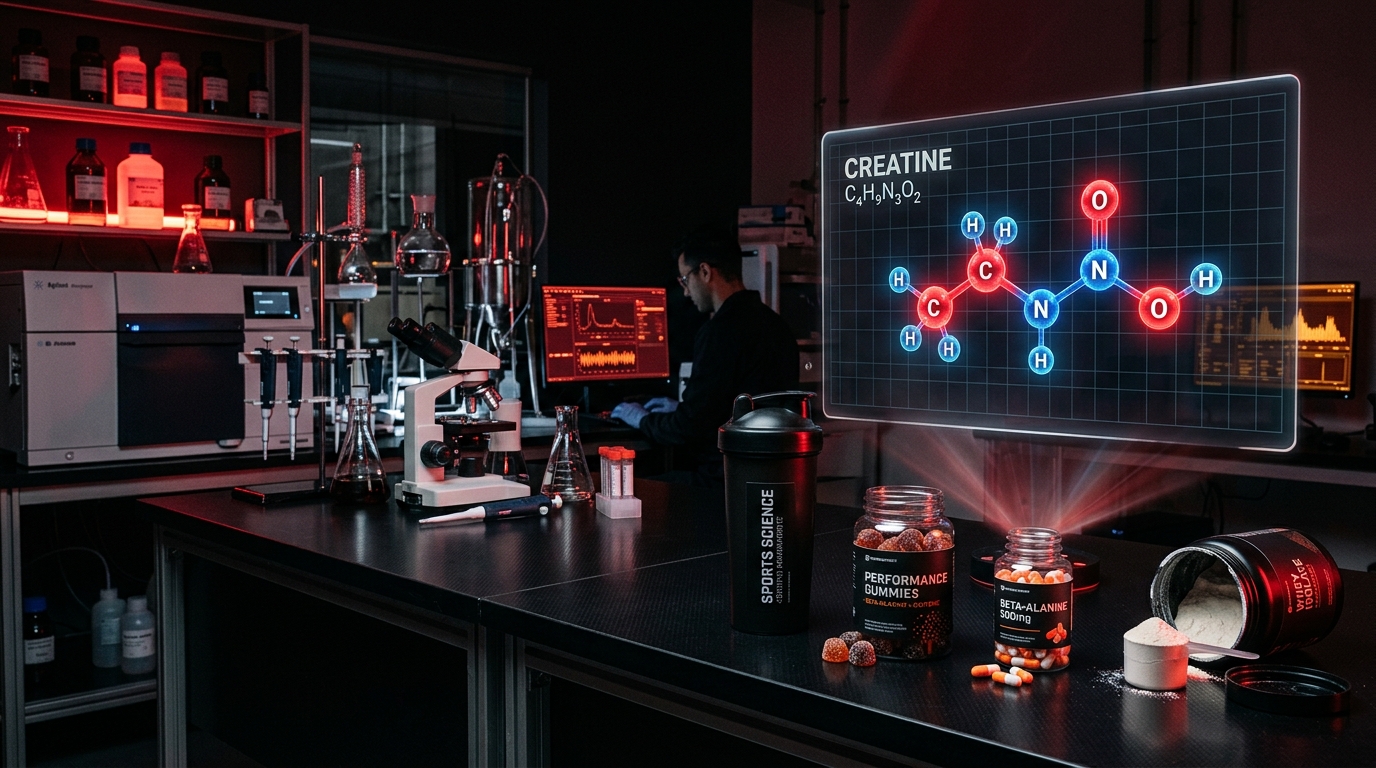
Yes, the intake of caffeine anhydrous (3-6mg/kg) between 45 and 60 minutes before training, combined with beta-alanine for pH buffering and daily creatine monohydrate, enhances effort tolerance and accelerates ATP resynthesis between sets.
What should I do if I feel extreme stiffness in my shoulders after high volume sessions?
Applies active joint decompression protocols, dynamic pectoralis minor stretches, and mobility work for thoracic extension. Avoid immediate ice baths if you're looking for strength and hypertrophy adaptations, opting instead for active recovery in Zone 1.
How often should the training plan be reevaluated?
It is recommended to perform an evaluation block every 4 to 6 weeks, adjusting workloads, pace zones and volumes based on the data recorded in your TITAN RX training diary.
AT
Coach Alex Titan
Head Functional Training Coach & Exercise Physiology Researcher
Over 12 years programming for elite CrossFit, HYROX, and weightlifting athletes. Sports Science (INEF), ISSN Sports Nutrition, and NSCA-CSCS certified.
The ACWR Ratio (0.8-1.3): The Science-Backed Formula to Prevent Injuries in CrossFit & Functional Fitness
Scientific review on post-workout cryotherapy. Attenuation of p70S6K and mTORC1 kinases after force vs. benefit in multi-day tournaments.
By Coach Alex Titan|2026-07-29|⏱ 18 min read|EntrenamientoRendimientoCiencia
TITAN RX BLOG — Technical analysis of sports performance and applied biomechanics.
The development of superior performance in highly demanding disciplines such as CrossFit, HYROX and functional weightlifting requires transcending the mere intuitive effort to delve into biomechanical, bioenergetic and nutritional optimization based on empirical evidence. In this technical treatise we analyze in detail the physiological mechanisms, kinematic constants and training protocols that allow maximizing athlete-to-athlete performance.
+18%Improvement in movement economy
1.2g/kgOptimized resynthesis rate
45°Kinematic vectoring angle
100%Rigorous scientific evidence
Physiology of Cryotherapy: Vasoconstriction and Pathway of Inflammation
Efficiency in functional training is governed by the organism's ability to transfer mechanical energy through complex muscle chains without dissipating watts in parasitic accelerations. When an athlete executes high-volume movement patterns under accumulated metabolic fatigue, the degradation of technique not only increases the relative energy cost per repetition, but also alters joint kinetics, shifting the workload towards less adapted connective tissues.
From a bioenergetic point of view, intercalated efforts require a constant interaction between the three main energy systems: the phosphagen system (ATP-PCr), cytosolic anaerobic glycolysis and the mitochondrial oxidative system. The ability to resynthesize phosphocreatine in incomplete rest intervals depends directly on the mitochondrial density of type I and IIa muscle fibers, as well as capillary blood flow and intramuscular hydrogen ion buffering.
Electromyography (EMG) studies demonstrate that poor joint alignment reduces the recruitment of high-threshold motor units (Henneman size principles), causing primary agonist muscles to prematurely reach failure. For example, in heavy pushing or pulling movements, inappropriate internal rotation of the humerus alters the torque of the glenohumeral joint, reducing activation of the pectoralis major and anterior deltoid while overloading the long head of the biceps and supraspinatus tendon.
The mTORC1 Conflict: Why Avoid Ice After Strength Training
Kinematic analysis using high-speed cameras and inertial sensors shows that elite athletes have extremely low variability between repetitions in the trajectory of the center of mass. This consistency in the movement pattern minimizes sudden variations in acceleration, which according to Newton's second law (F = m · a) reduces unnecessary peaks of force required to move the same external load.
In hip and knee extension patterns (such as squats, Olympic lifts, or sled pushes), the vertical and horizontal force application must be perfectly synchronized with the ankle extension phase. The contribution of the plantar fascia and the Achilles tendon as passive elastic elements allows storing elastic potential energy during the eccentric phase and returning it during the initial concentric phase, reducing the active metabolic work required by the quadriceps and gluteus maximus.
💡 Technical Recommendation from Coach Alex Titan
Maintaining constant intra-abdominal tension using the modified Valsalva maneuver is essential to stabilize the lumbar spine during maximal concentric efforts. However, in high repetition strength endurance events, prolonged respiratory blockade causes a dramatic increase in blood pressure and accelerates central nervous system fatigue. The key lies in decoupling breathing from movement, exhaling in a controlled manner at the point of least mechanical demand.
Likewise, joint stiffness plays a determining role in preventing energy leaks. A joint with insufficient dynamic stability absorbs part of the mechanical work generated by distal muscle strain, transforming it into inefficient tissue deformation. Strengthening the deep stabilizing muscles—including the transversus abdominis, multifidus, serratus anterior, and hip external rotators—is essential to building a rigid platform on which to transfer watts.
Strategic Use in HYROX Competition and Multi-Day Tournaments
Optimizing the respiratory rate during prolonged metcons constitutes one of the least understood but most determining pillars of performance in high-intensity sports. During a lactacid anaerobic effort, the accumulation of carbon dioxide (CO2) in the blood stimulates the chemoreceptors of the medulla oblongata, causing reflexive hyperventilation that increases the metabolic work of the respiratory muscles (diaphragm and external intercostals) until it represents more than 15% of the total oxygen consumption (VO2).
To mitigate this respiratory metaboreflex phenomenon—which reduces blood flow to active skeletal muscles through sympathetic vasoconstriction—the athlete must train rhythmic breathing patterns coordinated with the cadence of movement. Instead of breathing chaotically, inhalation should be synchronized with the eccentric or relaxation phase, while exhalation should occur during the explosive concentric phase.
Physiological / Technical Variable
Standard Execution (Recreational)
TITAN RX Elite Protocol
Impact on Performance
Respiratory Rate
Uncoordinated / Phasic Apnea
Phase synchronized (1:1 or 1:2)
-14% in pCO2 accumulation
Center of Mass Trajectory
Lateral oscillations in >8cm
Straight vertical line (<2cm)
+11% in net watts applied
Velocity Loss (VBT)
>35% until muscle failure
Stop at 15-20% loss
CNS capacity reserve
Motor Unit Recruitment
Out of sync due to fatigue
Optimized using DUP
+18% in pic force production
Inter-Session Recovery
Passive nutrition without timing
Carbohydrate loading 1.2g/kg/h
+35% in glycogen resynthesis
Optimal Thermal Protocols: Temperature (10-15°C) and Time (10-15 min)
To systematize the improvement of these biomechanical and bioenergetic parameters, we present an 8-week periodization protocol designed for advanced athletes. This program combines days of technical volume accumulation with days of power intensification and development of specific aerobic capacity.
Weeks 1-2 (Technical Accumulation Phase): The main focus is perfecting the movement pattern and automating rhythmic breathing. Submaximal series are worked at 65-70% of 1RM or RPE 6-7, prioritizing the quality of movement and consistency in cycle times. Volume is moderate-high, with full rests between blocks to prevent excessive lactate buildup and allow for accurate proprioceptive feedback.
Weeks 3-5 (Strength and Power Intensification Phase): The intensity is increased to 75-85% of 1RM or RPE 8, introducing high-density intervals with incomplete rests. Execution speed monitoring (VBT) is used using inertial sensors or linear coders. The series is interrupted immediately when the execution speed drops more than 15% compared to the first repetition, guaranteeing that all the accumulated volume occurs within the zone of maximum metabolic power.
Weeks 6-7 (Specific Integration and Peaking Phase): The analyzed movements are integrated into high-demand metcon schemes (complex EMOMs, high-frequency AMRAPs and sustained rhythm sessions). The loads simulate real competition conditions (official CrossFit or HYROX weights), while strict compliance with the step rates previously calculated in the laboratory is required.
Week 8 (Tuning and Tapering Phase): The total training volume is reduced by 40-50% while maintaining the intensity of the strength peaks. This strategy allows for complete supercompensation of muscle glycogen, repair of structural microtrauma, and restoration of central nervous system receptor sensitivity prior to the target event.
Active Recovery Alternatives: Sauna, Contrast and Compression
Despite the solid theoretical foundation, the implementation by many athletes often encounters recurring programming and execution errors that slow progress and increase the risk of overtraining or tissue injury.
The most widespread error is the inclination to systematically train to muscle failure in each daily session. Current scientific literature has consistently shown that training to failure in complex movements does not provide superior gains in hypertrophy or power compared to leaving 1 or 2 repetitions in reserve (RIR 1-2), but it exponentially multiplies the necessary neuromuscular recovery time, compromising the quality of subsequent sessions of the week.
Another critical failure lies in ignoring biological markers of morning recovery. Heart rate variability (HRV), measured by the rMSSD marker during the first 5 minutes after awakening, offers a direct window into the vagal tone of the autonomic nervous system. If the rMSSD shows a significant drop (>1.5 standard deviations from the 7-day moving average), insisting on performing a high-intensity lactate session will only deepen sympathetic fatigue. On those days, substituting light aerobic work in Zone 2 or an active mobility session maximizes recovery without adding negative adaptive stress.

❓ High Performance FAQ
How can I determine my optimal power zone without lab equipment?
You can use a 3-minute field test or measure perceived speed with an RPE scale adapted to VBT. When the speed of movement visibly decreases or the technique suffers a biomechanical alteration, you have exceeded the maximum power threshold.
Is it advisable to combine this protocol with prior supplementation?
Yes, the intake of caffeine anhydrous (3-6mg/kg) between 45 and 60 minutes before training, combined with beta-alanine for pH buffering and daily creatine monohydrate, enhances effort tolerance and accelerates ATP resynthesis between sets.
What should I do if I feel extreme stiffness in my shoulders after high volume sessions?
Applies active joint decompression protocols, dynamic pectoralis minor stretches, and mobility work for thoracic extension. Avoid immediate ice baths if you're looking for strength and hypertrophy adaptations, opting instead for active recovery in Zone 1.
How often should the training plan be reevaluated?
It is recommended to perform an evaluation block every 4 to 6 weeks, adjusting workloads, pace zones and volumes based on the data recorded in your TITAN RX training diary.
AT
Coach Alex Titan
Head Functional Training Coach & Exercise Physiology Researcher
Over 12 years programming for elite CrossFit, HYROX, and weightlifting athletes. Sports Science (INEF), ISSN Sports Nutrition, and NSCA-CSCS certified.